
WEEK 1
FAVOURITE SLIDE:
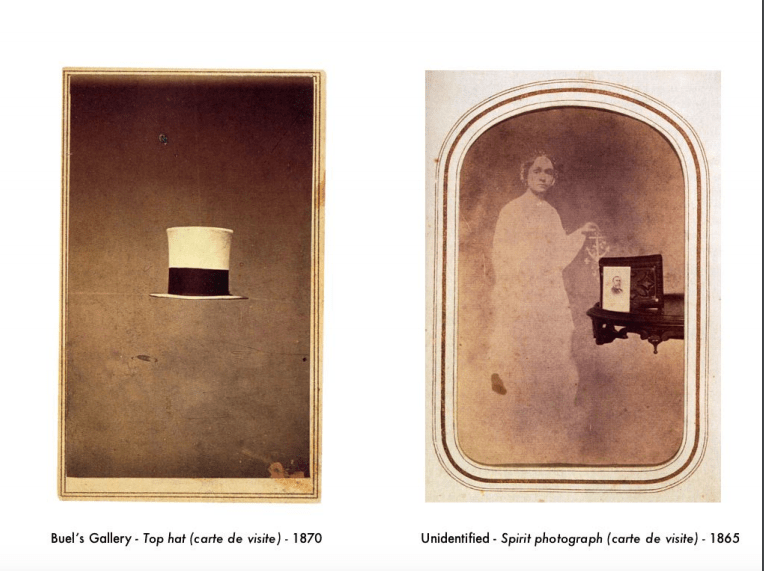
I chose this as my favourite slide as i found the idea of spirit photography very interesting. It is something very unusual and has a mysterious vibe to it.Spirit photography is what seems to be the effect of radiation of some sort on photosensitive film. Such results continue today, although much has changed from the early days of photography. In those days, the photographer first had to prepare a glass plate by coating it with a film of collodion containing potassium, sensitise it by dipping it into a bath of silver nitrate and then take the photograph while the plate was still wet. Each exposure is very exciting and the most interesting part is that each batch of chemicals mixed was a new experiment and every result and reason to take another.
IMAGE OF THE WEEK:
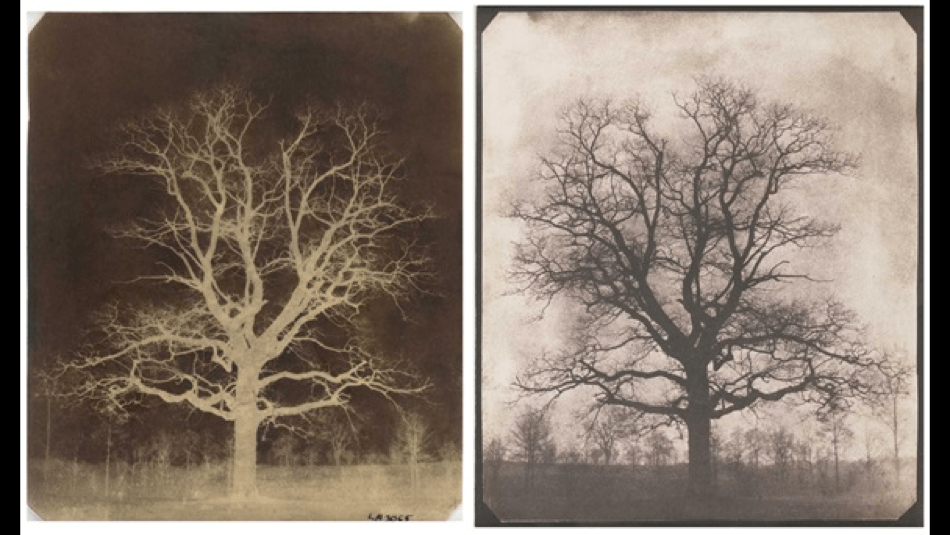
‘An oak tree in winter’
The British inventor of photography, William Henry Fox Talbot (1800–1877), produced his first ‘photogenic drawings’ in 1834 and in the following year made his first camera negative.Talbot began experimenting with the possibility of creating accurate images of the world through mechanical and chemical means. By 1835 he had produced his first camera negative, and soon realised that a positive image could subsequently be obtained by further printing. Talbot immediately made his own earlier researches public and in the course of the following year refined them to produce in 1840 what became known as the calotype – from the Greek kalos or beautiful – a process which produced a negative through the development of a ‘latent’ or ionvisible image. In the few years during which he was directly involved with photography, Talbot produced some masterly photographic images using the calotype process. This particularly striking view was made at Talbot’s family home at Lacock Abbey in Wiltshire.
By exposing the calotype negative produced in the camera, in contact with a further sheet of sensitised paper, a positive image was produced, and variants of Talbot’s negative-positive process were to dominate photography up to the digital age. The negative has been waxed after processing to increase the translucency of the paper, but the fibres of the original paper can still be seen in the image and these, alongside the soft and delicate tones, are characteristic of the process. Although Talbot had quickly recognised the expressive potential of the new medium, this lack of sharp definition (particularly in contrast to the competing daguerreotype process) was often criticised by the wider public. Despite patenting the process, Talbot never achieved major commercial success with the calotype, although today his work is seen as one of photography’s major artistic – as well as scientific – achievements.
RELATED IMAGES:
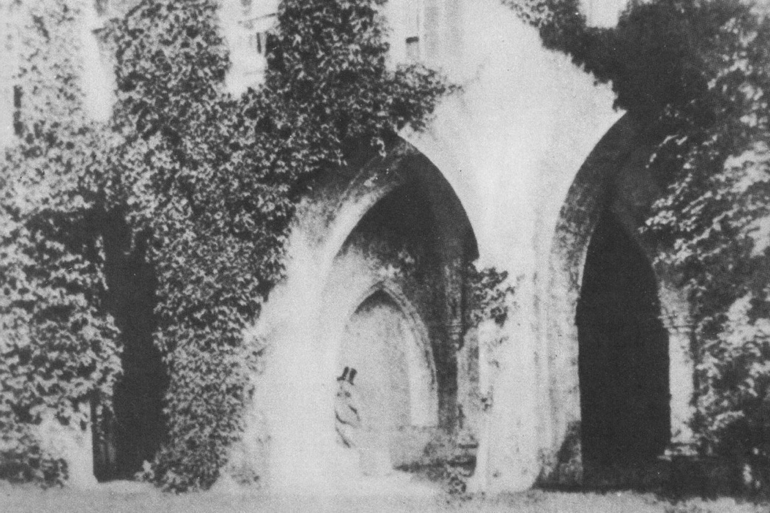
Art, Technology, & Early Photography: William Henry Fox Talbot

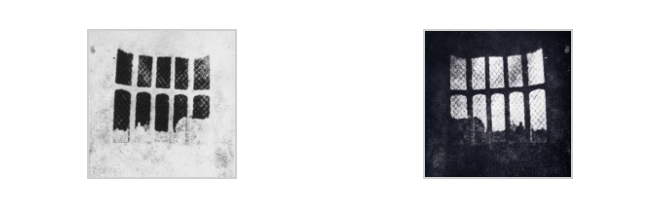
Made in August 1835, this positive (left) is from the oldest camera negative (right) in existence today.
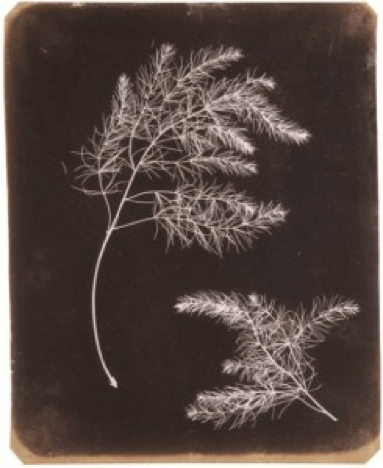
Talbot’s early “salted paper” or “photogenic drawing” process used writing paper bathed in a weak solution of ordinary table salt
WEEK2:
FAVOURITE SLIDE:
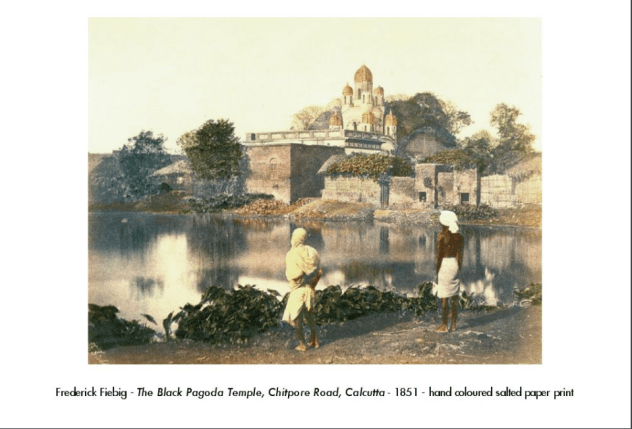
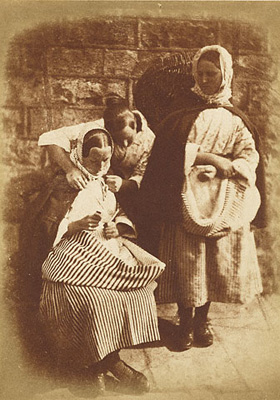
Salted paper prints were created from photogenic drawing negatives, calotype negatives, paper negatives, and eventually glass plate negatives. Salted paper prints produced from paper-based negatives have a grainy appearance. Even those printed from waxed paper negatives, which make paper fibers less visible, exhibit some paper fibers.
Salted paper print. The successors to photogenic drawings,salted paper prints were introduced in 1839 by William Henry Fox Talbot. They were the first positive prints obtained frompaper negatives, called calotypes, which is why they are sometimes erroneously called “positive calotypes.”
IMAGE OF THE WEEK:
Unknown woman painting a man’s portrait, surrounded by art objects
n.d.
Daguerreotype, gold-toned,
Daguerreotypes
Negative-positive photography: salted paper prints
RELATED IMAGES:
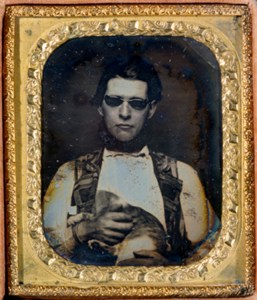
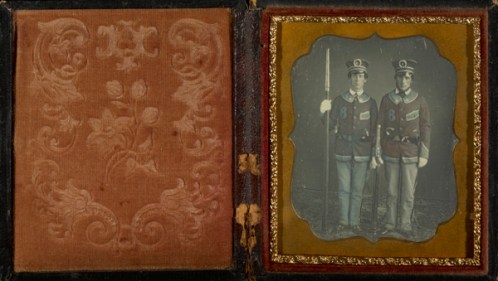
Portrait of Two Uniformed Men (Two Travelers), 1852–55, John Frederich Polycarpus von Schneidau. Half-plate daguerreotype image
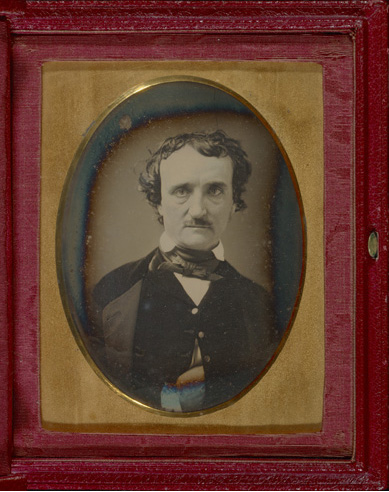
Portrait of Edgar Allan Poe, late May–early June 1849, unknown photographer. Daguerreotype
WEEK3
FAVOURITE SLIDE:
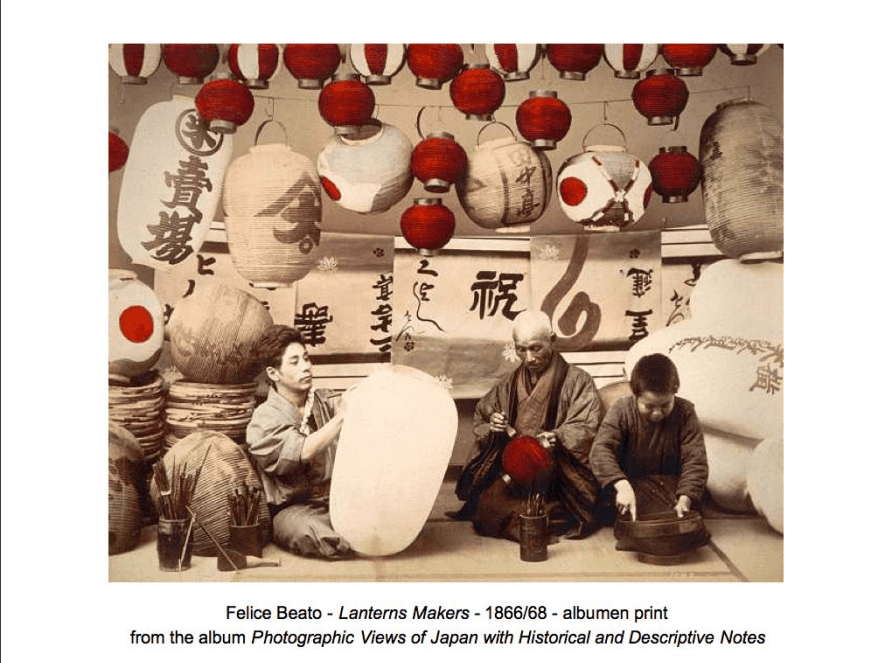
I chose this particular side as the vibrant red seen only in the lanterns was quite unique. It was probably handed painted later once the picture was printed. This image leaves the viewers in a fix as it is left to their imagination as to how the photograph must have been clicked.
IMAGE OF THE WEEK:
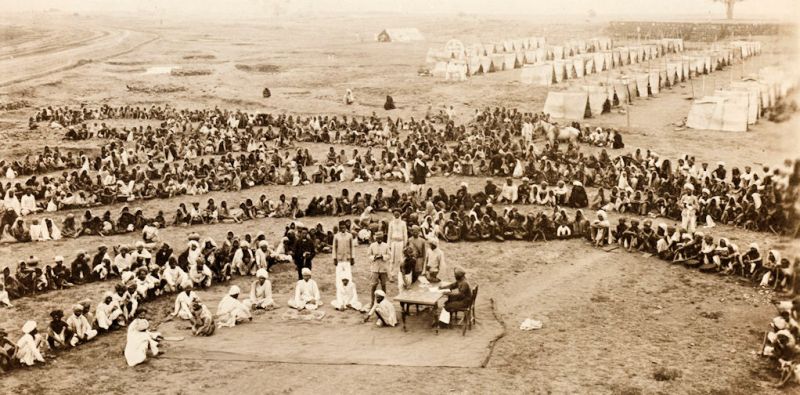
Lala Deen Dayal (1844–1905) was an Indian photographer. Those were early days of photography, and Deen Dayal used primitive equipment and chemicals. His first patron was Maharaja Tukoji Rao II of Indore, who introduced him to Sir Henry Daly, the British Agent at Indore, which eventually led to his appointment as “Photographer to His Excellency, the Viceroy”. Deen Dayal’s albums of India views and ancient monuments became very popular and were bought as memorabilia and gifts by the British and Indian Royalty.
Lala Deen Dayal is known for his intimate glimpses into the lives of princes, and the British, ordinary fold and tribals, as well as vistas of archaeological sites, monuments and the architectural heritage of the country are collectors items today.
Albumen prints are a variety of photographic paper print in which a finely divided silver and gold image is dispersed in a matrix of egg white. Such prints constitute by far the largest category of objects in 19th century photographic collections.
Therefore the conservation of albumen prints is one of the principal concerns in the whole field of the conservation of photographic materials.
The staining, fading and colour change may range from slight to very severe, but the extent of deterioration In albumen prints as a whole Is much more advanced than in nearly every other variety of photographic paper, including types which pre-date albumen papers
RELATED IMAGES:


Felice Beato
The link between these pictures clicked by Felice Beato and Laal Deen Dayal photographs is that both photographs were clicked around the same time and in albumen print. On one hand dayals photographs are blurry, black and white with a slight negative effect and on the other Beato’s photographs have a slight tint of colour in them. The difference in the kind of work the two were doing was truly remarkable.
WEEK 4:
FAVOURITE SLIDE:
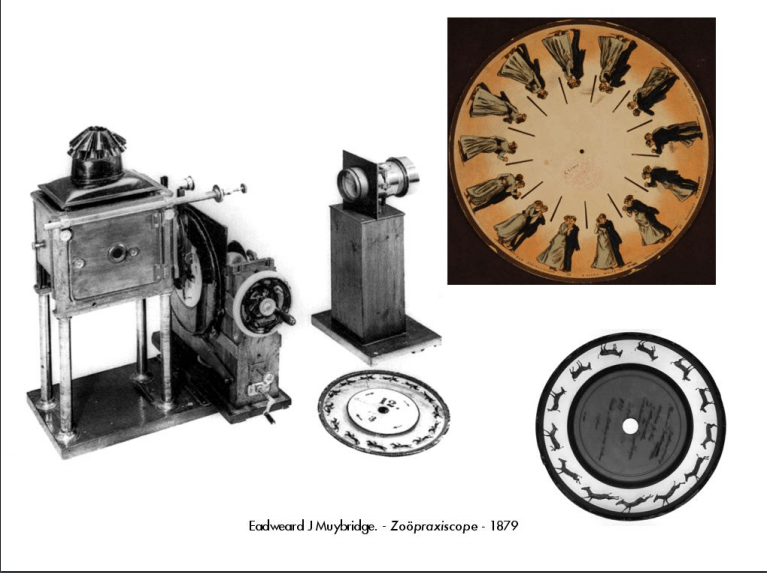
IMAGE OF THE WEEK:
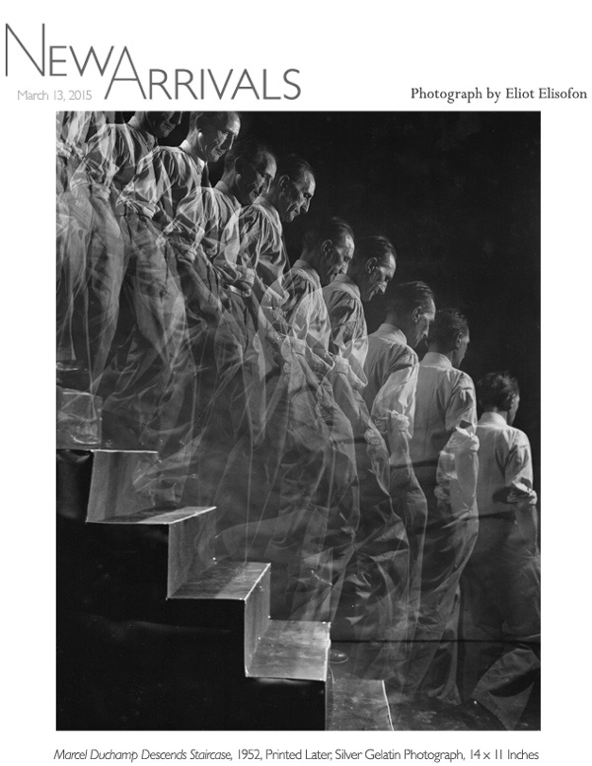
“Nude Descending a Staircase No. 2.”
In this painting Marcel Duchamp fuses the fragmented concept of Cubism with the repetitive images and energy of chronophotography, particularly found in the work of early photographer Eadweard Muybridge. Duchamp was trying to show a figure moving through time within the medium of a still painting.
Elisofon brilliantly paid tribute to “Nude Descending a Staircase No. 2” through photography’s ability to stop motion. In his time-lapse photograph of a ghostly Duchamp walking down a flight of stairs, Elisofon finds a photographic equivalent to Duchamp’s ability to freeze time and space in his unique and creative collaging of images. Elisofon captured the artist’s movements on a single frame of film by leaving the shutter of his lens open while he set off multiple flashes, each burst of light capturing one position of the body as it moved down the stairs. The photograph is a repetitive flash-picture and the careful manipulation of light makes the photograph as Dadaist as the then 40-year-old painting. While they were setting up the shot, Duchamp apparently asked Elisofon, “Don’t you want me to do it nude?” A unique portrait of the pioneering twentieth century artist, while also a brilliant homage to a seminal work of art, “Marcel Duchamp Descends Staircase” cleverly and beautifully captures Duchamp in Elisofon’s ethereal vision.
In the last years of the nineteenth century French physiologist Etienne-Jules Marey finds novel ways to record and visualize the motions of the body over time. He’s not interested in the person but in the motion itself. He develops “the graphic method,” in which movement is abstracted from the individual, exists as an independent entity and, most importantly, a useful commodity.
Marey wants to understand the motions of a bird in flight, so he attaches a bird to a harness so that the movement of its wings, now hooked up to wires and levers, cause lines to be etched onto charcoal-blackened paper wrapped around a revolving cylinder. He takes multiple exposures of a runner dressed all in black except for white lines and dots that, in the final photograph, represent points in time—motion-capture technology. If the body is a complex mechanism, Marey wonders, then how can it be optimized, improved? His first client is the French army, which asks him to devise a way to make soldiers march more efficiently.
Marey’s chronophotographic gun was made in 1882, this instrument was capable of taking 12 consecutive frames a second, and the most interesting fact is that all the frames were recorded on the same picture, using these pictures he studied horses, birds, dogs, sheep, donkeys, elephants, fish, microscopic creatures, molluscs, insects, reptiles, etc. Some call it Marey’s “animated zoo”. Marey also conducted the famous study about cats landing always on their feet. He conducted very similar studies with a chicken and a dog and found that they could do almost the same. Marey also studied human locomotion. He published another book Le Mouvement in 1894.
Marey also made movies. They were at a high speed (60 images per second) and of excellent image quality. His research on how to capture and display moving images helped the emerging field of cinematography.
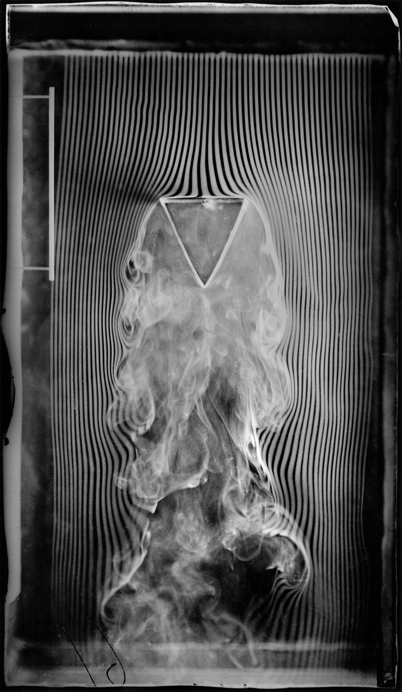
Towards the end of his life he returned to studying the movement of quite abstract forms, like a falling ball. His last great work was the observation and photography of smoke trails. This research was partially funded by Samuel Pierpont Langley under the auspices of the Smithsonian Institution, after the two met in Paris at the Exposition Universelle (1900). In 1901 he was able to build a smoke machine with 58 smoke trails. It became one of the firstaerodynamic wind tunnels.
RELATED IMAGES:
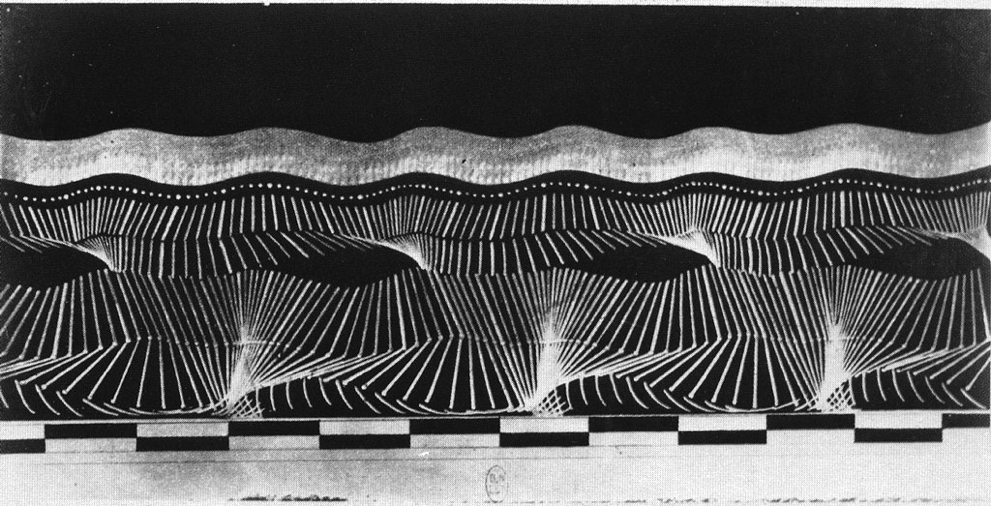
ETIENNE-JULES MAREY AND THE MECHANICS OF THE BODY
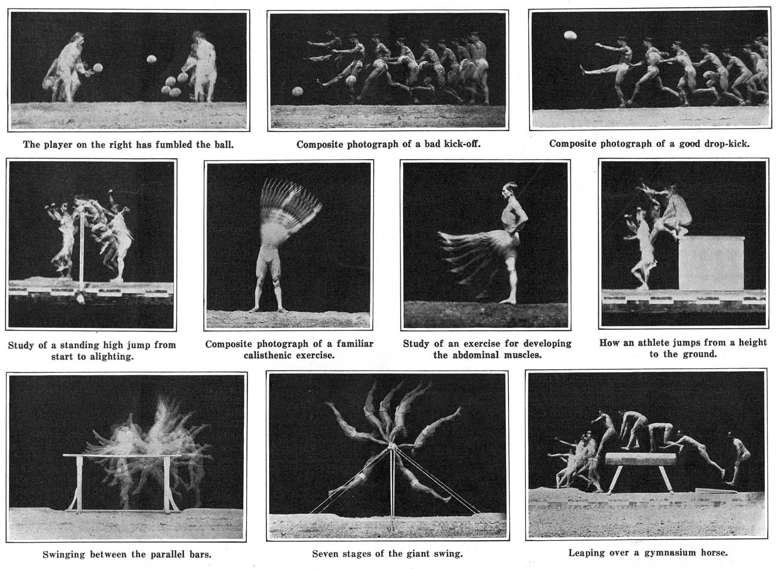
E.J. Marey, Chronophotographs from “The Human Body in Action,” Scientific American, 1914
WEEK5:
FAVOURITE SLIDE:
IMAGE OF THE WEEK:
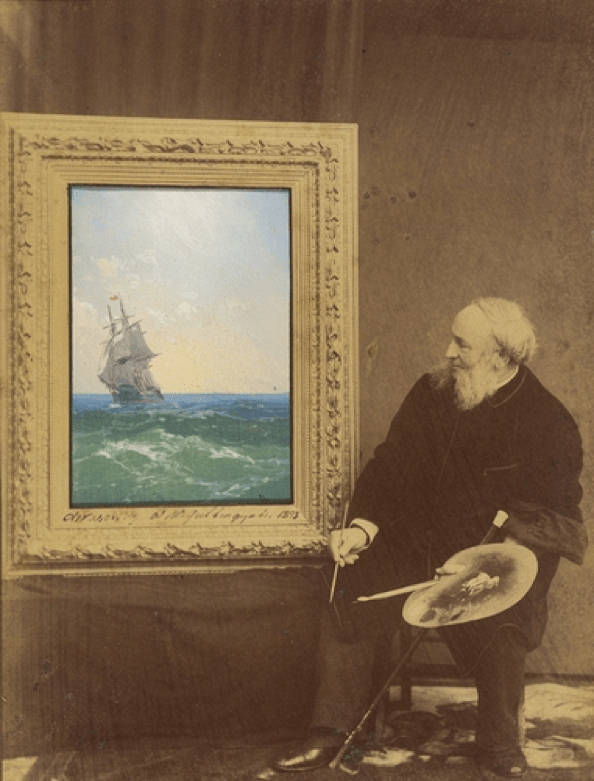
The Russian Romantic artist Ivan Konstantinovich Aivazovsky (1817–1900) was widely renowned for his paintings of sea battles, shipwrecks, and storms at sea. Born into an Armenian family in the Crimean port city of Feodosia, Aivazovsky was enormously prolific—he claimed to have created some six thousand paintings during his lifetime. He was a favorite of Czar Nicholas I and was appointed
official artist of the Russian imperial navy. In 1887, as part of a jubilee celebration of his career, Aivazovsky hosted a dinner for 150 friends. Each guest received a miniature painting by Aivazovsky set into a studio photograph of the artist at work. I chose this particular picture as I found it very interesting as the entire photograph Is taken in black and white, just highlighting the painting, making it the focal point.
Related Images:
Mutsuhito, The Meiji Emperor
Artist:Uchida Kuichi (Japanese, 1844–1875)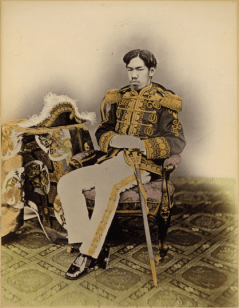
- WEEK 6
FAVOURITE SLIDE:
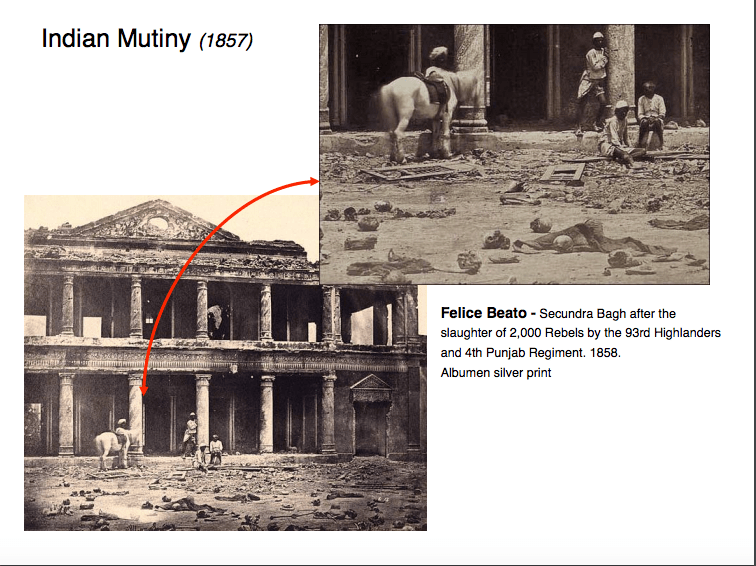
IMAGE OF THE WEEK:
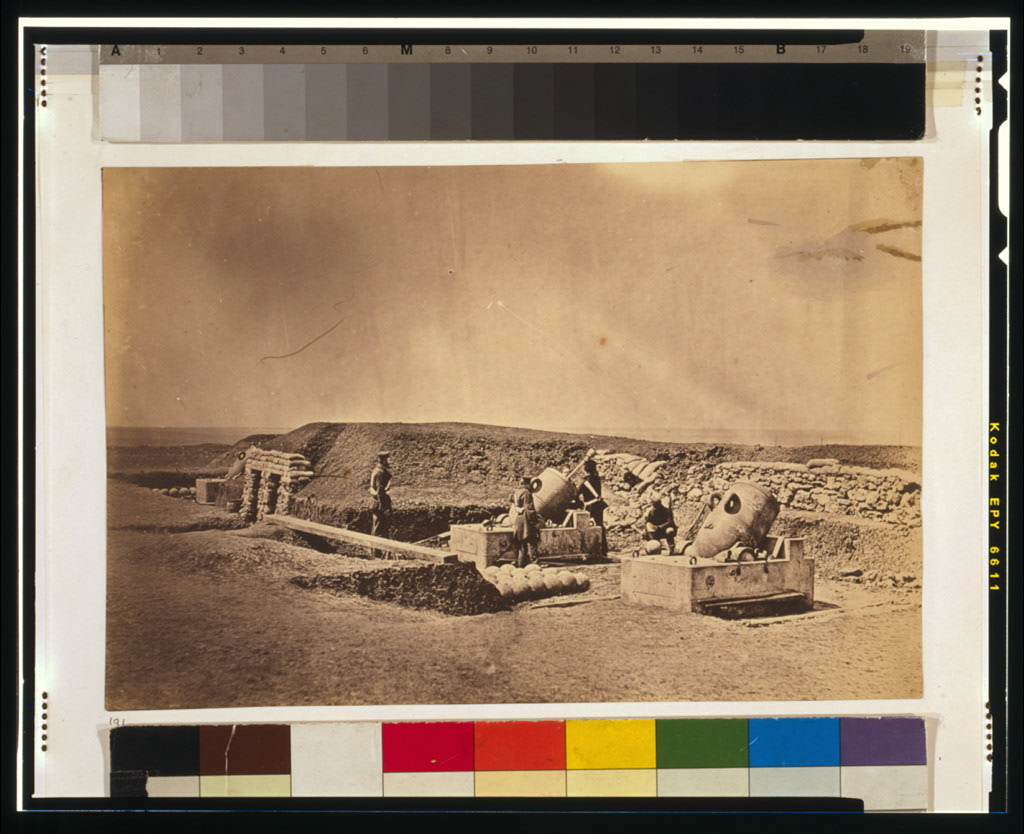
Roger Fenton’s Crimean War photographs represent one of the earliest systematic attempts to document a war through the medium of photography. Fenton, who spent fewer than four months in the Crimea produced 360 photographs under extremely trying conditions. While these photographs present a substantial documentary record of the participants and the landscape of the war, there are no actual combat scenes, nor are there any scenes of the devastating effects of war.
Related Images:
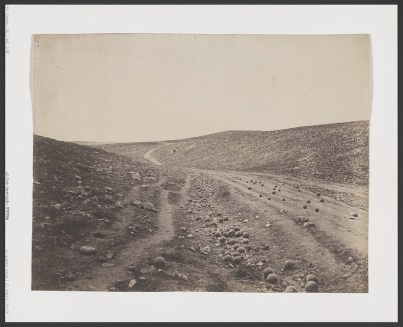
The valley of the shadow of death
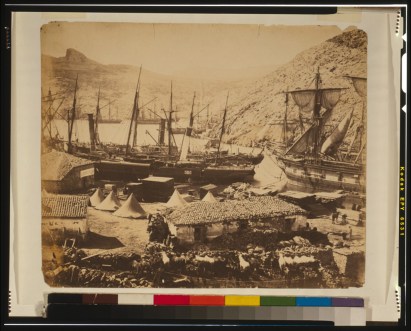
Cossack Bay, Balaklava
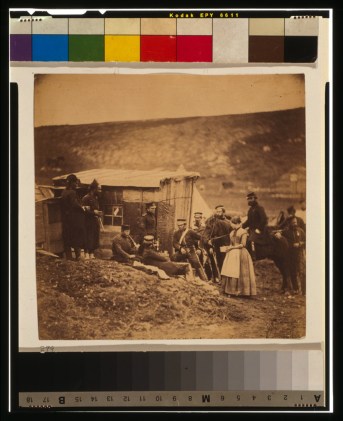
Camp of the 4th Dragoons, convivial party, French & English
ALBEUM STYLE..
WEEK 7
FAVOURITE SLIDE:
IMAGE OF THE WEEK:
RELATED IMAGES:
 Jahnavi Singh